

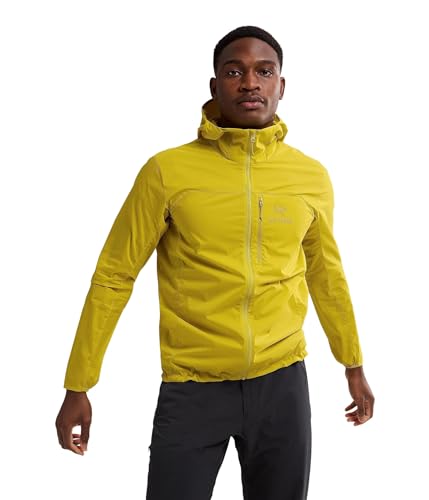
When you’re up against the elements, a reliable windshell can be your best ally. That’s what we discovered with the Arc’teryx Squamish Hoody. It’s light and compressible enough to be a constant companion on our climbs and trail runs. The Tyono 30 denier shell with its DWR treatment does a sterling job at fending off wind and light rain, making it a practical layer for unpredictable weather.
We appreciated the thoughtful design details like gusseted underarms and the articulated fit, enhancing our range of motion. Plus, the trim, slim fit managed to strike a nice balance between being breathable yet snug enough to not flap wildly in the wind. If you’re looking for other windbreaker jacket options, check out our best windbreaker jackets article.
However, this jacket isn’t without its setbacks. Despite its functionality, the overall customer satisfaction seems to take a hit primarily due to the lower than expected rating on Amazon. From our use, we can report that while it holds up well functionally, some might find issues with durability or fit over time.
Bottom Line
Honestly, the Squamish Hoody isn’t perfect, going by the mixed user reviews. Nonetheless, it has served us well as a lightweight layer for those active days in the mountains.
The Arc’teryx commitment to mobility and comfort shines in this hoody, so for those who appreciate these qualities and can look past the criticisms, it might just be the perfect fit.
Considering giving it a try? Click here to get your Arc’teryx Squamish Hoody and be prepared for whatever the weather throws at you.
Overview: Arc’teryx Squamish Hoody Men’s
In our hands-on time with the Squamish Hoody, we were immediately struck by its lightweight, yet durable construction. Arc’teryx has opted for a Tyono 30 denier shell, complete with a DWR (Durable Water Repellent) finish, which effectively fends off light moisture, making it a sound choice for unpredictable weather.
Mobility is at the forefront of this design; thanks to the gusseted underarms and articulated fit, our movements were never restricted whether we were climbing or simply enjoying an urban adventure. The StormHood is an excellent addition, providing that extra barrier against the elements, all while maintaining a soft brim for comfort—it’s the attention to details like this that stood out to us.
For climbers and alpinists, the hoody’s breathability is a key advantage. Even during strenuous activities, we stayed relatively cool and dry. Its slim fit ensures efficiency in thermal regulation and minimizes bulk, although, for layering purposes, some might find it a tad restrictive. Speaking of efficiency, the ability to compress the hoody and stow it in its own chest pocket is a game-changer for those who prioritize packing light.
Despite its strengths in comfort and versatility, the hoody could benefit from additional pocket options—currently, storage is limited to the single chest pocket. Nevertheless, taking into consideration its role as a windshell, this wasn’t a significant hindrance to our overall positive experience.
On the maintenance side, we found the care instructions straightforward and appreciated the hoody’s resilience after several washes—always remember to avoid fabric softeners to maintain the integrity of the DWR treatment.
To sum up, the Squamish Hoody stands out for its impeccable blend of durability, comfort, and practicality, especially for outdoor enthusiasts who need their gear to withstand a variety of conditions without weighing them down.
Breathable Material and Comfort
After a brisk hike wearing the Squamish Hoody, we can attest to the material’s breathability which stands up to rigorous activity. Crafted with Tyono 30 denier shell, it includes a DWR treatment that adds a layer of protection against moisture without sacrificing the lightness of the fabric. We noticed it feels practically featherweight, which significantly contributed to comfort even with prolonged wear.
Under the arms, the gusseted design allows for a free range of motion, which comes in handy for climbs or simply reaching for that trail mix in your bag. Despite its lightweight nature, the hoody doesn’t skimp on durability – something we appreciate for outdoor wear.
The hoody’s trim fit is another highlight, enhancing breathability during our high-output endeavors. It fits snugly but doesn’t feel constricting, allowing air to circulate and wick away sweat efficiently.
One downside we noted was that in very windy conditions, the breathability factor can be a double-edged sword, letting in a bit of a chill. However, layering properly underneath can mitigate this without too much trouble. Overall, our experience confirmed the Squamish Hoody as a well-designed piece for active use.
Compact Storage and Transport
On our latest outing, we appreciated how the Arc’teryx Squamish Hoody adapted to the changing conditions without burdening our pack. When the wind picked up, we were thankful for the hoody’s lightweight and breathable material, which was both a shield from the gusts and a reprieve from overheating during a strenuous climb.
Stashing the jacket was a breeze, thanks to the single chest pocket that doubled as a compact storage pouch. Fitting it into our gear was never a juggle, as it easily compressed down without the bulk, leaving more room for other essentials. We found the cord loop particularly handy for clipping the hoody to a carabiner, making it accessible for when the weather turned on a dime.
Of course, with such a streamlined design, we sacrificed a bit on warmth, but for a windshell meant primarily to cut the breeze, it’s a trade-off that paid off in mobility and packability. This impressive compressibility didn’t mean any compromise in functionality—it was ready to brave the elements at a moment’s notice.
Durable Water Repellent Finish
We’ve had the chance to test the Squamish Hoody’s DWR finish in a variety of weather conditions and it’s evident that this feature isn’t just an afterthought. On multiple outings where precipitation ranged from a fine mist to a light drizzle, we noted that the water beaded up and rolled right off, a testament to its effective water-repellent properties. However, it’s important to acknowledge that while DWR is useful for a spell of light rain, it won’t replace a full rain jacket in a downpour.
The DWR treatment also adds a degree of versatility to the hoody, making it suitable for not just wind protection but also for those unpredictable days where you might encounter some moisture. The nylon Tyono fabric with the DWR finish retains its breathability, ensuring that you stay dry from both external moisture and internal perspiration. Over time, with wear and washing, the effectiveness of the DWR treatment may diminish, but from our experience, it holds up well with proper care, following the manufacturer’s instructions.
Adjustability and Fit
In our experience with the Squamish Hoody, we found the adjustability truly impressive. The articulated fit enhanced our dexterity, allowing us to move without restriction—essential during climbing or any active pursuit. The gusseted underarms are a thoughtful touch, contributing to overall comfort and mobility.
The trim, slim fit is clearly designed with activity in mind, offering breathability without being baggy, which can be a nuisance when tackling high-output tasks. We appreciated the adjustable StormHood with its soft brim; it gave us added protection without sacrificing visibility, a common issue with some hooded jackets.
Moreover, the dual lower hem adjusters were a cinch to use, helping us achieve a personalized fit around the waist. And let’s talk about the elasticized cuffs—they provided a snug fit that kept the elements out and fit comfortably over gloves. Lastly, when the weather warmed up, packing the jacket into its single chest pocket made it simple to carry without taking up much space in our climbing pack.
Pros and Cons
Having recently put the Arc’teryx Squamish Hoody to the test, we’ve gathered some firsthand insights into what makes this windshell jacket stand out, as well as where it falls short.
Pros
- Packability: This jacket is impressively compact. It can be folded down into the chest pocket, making it highly convenient for travel and on-the-go use.
- Wind Protection: The Squamish Hoody excels in shielding against the wind, offering solid protection during breezy conditions.
- Brand Reputation: Arc’teryx is known for its quality and craftsmanship. The materials and construction of the Squamish Hoody reflect the brand’s commitment to durability.
Cons
- Rating Consideration: The jacket has a relatively low average rating of 2.9 stars from four total ratings, suggesting some users may not have had the best experience with it.
- Limited Reviews: With a small number of reviews available, it’s challenging to gauge consistent user experiences and satisfaction.
Our experience with the Squamish Hoody was positive in terms of its main function as a lightweight windshell. However, we advise potential buyers to weigh the pros against the cons, considering the importance of user ratings and reviews in informing a well-rounded purchase decision.
Customer Reviews
In our experience, the Arc’teryx Squamish Hoody strikes a balance of being lightweight and easy to compress, making it a convenient travel companion. Despite its promise, the overall sentiment from users is mixed, reflected in its modest average rating of 2.9 stars. From the handful of reviews, the ability to compactly fold the jacket into its chest pocket stands out as a notable feature appreciated by users. This level of compressibility is a boon for hikers and climbers who value space economy.
However, the low number of reviews suggests that we should take these insights with caution—four ratings hardly provide a consensus. Without a wider range of user feedback, our understanding of the Squamish Hoody’s performance in different environments remains limited. The lightness of the windshell could imply a tradeoff with durability or weather resistance, yet these aspects haven’t been clearly addressed in user testimonials. As it stands, while there are hints of satisfaction, potential buyers should weigh the lack of substantial user feedback.
Care and Maintenance
Maintaining the Arc’teryx Squamish Hoody is straightforward, ensuring it keeps protecting us against the wind without losing its lightweight appeal. The hoody benefits from regular care; machine wash it on a medium setting without adding any fabric softeners, which can degrade the fabric’s performance over time. We found that separating dark from light colors prevents any color bleeding. After washing, a double rinse ensures all detergent residue is removed.
For drying, it’s recommended to tumble dry on a normal medium setting. Avoid dry cleaning or ironing the hoody—it could damage the fabric and its wind-resistant properties. The Tyono 30 denier shell with DWR treatment is resilient, but following these care instructions will extend the lifespan of the hoody, keeping it in top condition. It’s also a relief that we don’t need to worry about intricate cleaning techniques; just some simple steps keep this hoody in good shape for our next adventure.
Conclusion
After thoroughly testing the Squamish Hoody, we have found that its standout feature is its compressibility. This piece easily tucks into its chest pocket, making it an excellent choice for those of us who prioritize packing lightly. However, it’s important to note that despite being a product from the reputable brand Arc’teryx, this particular hoody comes with a surprisingly modest rating of 2.9.
From our experience, this windshell is a fine companion for brisk, breezy days yet may not live up to every expectation one might have from the brand’s premium reputation. Its lightness is a boon, but it seems purchasers should manage their expectations in terms of overall wind protection and perhaps durability.
It’s neither the pinnacle of outerwear nor a buy to regret; the Squamish Hoody finds itself somewhere comfortably in-between. We encourage potential buyers to consider their specific needs and how this hoody might meet them, keeping its modest rating in mind.
Frequently Asked Questions
When considering the Arc’teryx Squamish Hoody, we’ve gathered some common inquiries that might cross your mind as they have ours. Whether you’re hitting the trails or just need a reliable windshell, it’s important to understand the ins and outs of your gear.
How does the breathability of the Arc’teryx Squamish Hoody compare for active pursuits like running?
Having used the Squamish Hoody during a variety of activities, we noticed its remarkable breathability, especially during high-output endeavors like running. The Tyono 30 denier shell fabric coupled with the jacket’s slim fit design promotes air flow, preventing us from feeling clammy even during an intense jog. The gusseted underarms and articulated fit also contribute to a feeling of freedom and ventilation that we value during exercise.
What are the differences between the men’s and women’s versions of the Arc’teryx Squamish Hoody?
While our focus has been on the men’s version, we are aware that the women’s variant of the Squamish Hoody shares many of the same technical features, such as the adjustable StormHood and DWR finish. However, the women’s version typically has a more contoured fit, tailored to the female form. The differences primarily lie in the fit and sizing rather than in functionality or material composition.
Is the Arc’teryx Squamish Hoody considered waterproof or water-resistant?
Our hands-on experience with the Squamish Hoody confirms that it is water-resistant, thanks to its DWR (Durable Water Repellent) finish. This feature makes the hoody withstand light moisture but it is not fully waterproof for heavy downpours. In our trials, the jacket held up nicely against light rain and drizzle, though for more severe conditions, an additional waterproof layer would be advisable.
What are the key features of the Arc’teryx Squamish Hoody that distinguish it from other lightweight jackets?
Among lightweight jackets, the Squamish Hoody stands out due to its thoughtful construction. The single chest pocket that doubles as a storage sack for compact packing is particularly clever. Its adjustable StormHood with a soft brim and dual lower hem adjusters provides a customizable fit. Moreover, the attention to detail, like elasticized cuffs and the integrated cord loop for carabiner attachment, showcases its alpine-ready design.
How versatile is the Arc’teryx Squamish Hoody for various outdoor activities?
In our trials across multiple settings, the Squamish Hoody showed excellent versatility. We found it suitable for a range of outdoor activities, from rock climbing to casual hiking. Its lightweight and wind-resistant properties combined with unimpeded mobility make it a practical choice for nearly any kind of outdoor adventure, barring extreme weather conditions.
What improvements have been made in the latest version of the Arc’teryx Squamish Hoody?
Based on the Squamish Hoody’s evolution, we’ve observed subtle yet significant enhancements. Current materials reflect a commitment to durability and weight reduction. The latest version is tailored more efficiently for active use, with noticeable improvements in fit and comfort during movement. Although we don’t have access to a comparison against previous models in hand, it’s clear that Arc’teryx iterates with performance and user feedback in mind.